AI is only worth it when it solves a real problem. We don’t bolt “AI” onto a product to put it on a slide — we build features that earn their place: faster workflows, lower costs, things that simply weren’t possible before. Here’s what our AI integration services look like in practice.

Dreambit AI integration services: integrations, LLM features, agents, consulting
Four ways we build with AI.

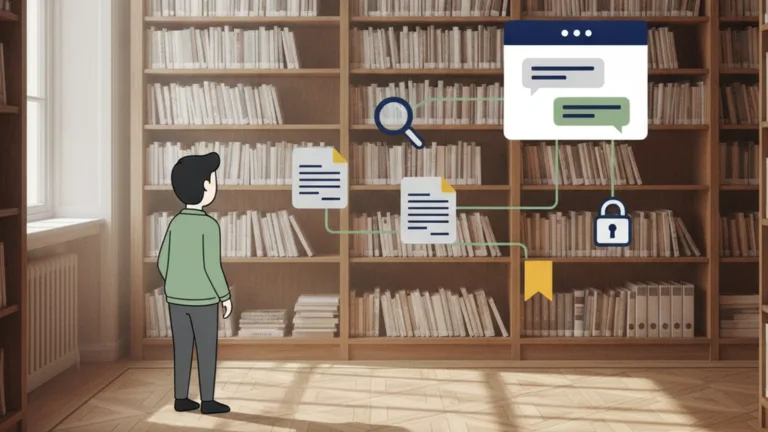
AI integration services in your product

We embed AI where it creates real value for your users, not where it looks impressive in a demo.

Example: for a B2B SaaS client we built a support assistant grounded in their docs that cut average first-response time by ~40% and deflected around 30% of routine tickets.

LLM-powered features

The building blocks that quietly make a product smarter:

Example: an extraction pipeline for a logistics client that replaced roughly 15 hours of manual data entry per week.

AI agents & automation

Beyond single calls — systems that carry out multi-step work on their own.

Example: an agent that automates invoice processing end to end, freeing the team from about 8 hours of manual reconciliation a week.

AI consulting & discovery

Sometimes the most valuable thing we do is tell you where not to use AI.

How Dreambit makes AI features hold up: spec-driven, tested, secure, scalable
The discipline behind every AI build.

How we build it — and why it holds up

The difference between an AI demo and an AI product is everything that happens after the demo. We build with the same discipline we apply to all our work:

Why clients work with us

Frequently Asked Questions

What AI services does Dreambit build?

Dreambit’s AI integration services cover four areas: AI integrations in your product (assistants, RAG, smart search), LLM-powered features (summarization, classification, extraction, generation), AI agents and automation, and AI consulting and discovery — all built into real products, not demos.

What is RAG and why use it?

Retrieval-Augmented Generation grounds AI answers in your own documents, knowledge base, and policies, and cites sources — instead of the model making things up. It’s how we make assistants and smart search reliable enough to put in front of your users.

How do you keep our code and data secure?

Your code and data aren’t used to train models, and sensitive work runs under a separate access regime. Generated code goes through the same reviews and checks as human code, plus a dedicated AI vulnerability pass — AI gets no bypass.

Can you build AI agents that act across our systems?

Yes. We build tool-connected agents that act across your stack — databases, APIs, and internal tools — to carry out multi-step work end to end, with human-in-the-loop checkpoints where the cost of error is high, not a black box.

How do we know if AI is worth it for our product?

That’s what our AI consulting and discovery is for. We map where AI will genuinely move the needle versus where it would just burn budget, give a realistic feasibility and architecture plan, and build a fast prototype so decisions are made on evidence, not hype.

Not “we use AI.” An engineering system where AI is a full participant in the process — bounded by our rules, and verified by our own controls — through Spec-Driven Development.

Why this isn’t another AI article

Every other studio today says “we do AI.” The only thing that matters is whether there’s engineering discipline behind it, or just marketing. Here’s how it actually works for us — with specifics, not slogans.

The core: Spec-Driven Development

We build through Spec-Driven Development (SDD). This isn’t a detail — it’s the reason AI gives us predictable results instead of guesswork.

The model never works from a vague “build this feature.” First comes a clear specification that becomes a contract for both the human and the AI:

  1. Spec first — we define expected behavior before any code is written
  2. Implementation within the spec — the engineer drives the AI along the contract, not the other way around
  3. Full test coverage — tests confirm conformance to the spec, not abstract coverage numbers
  4. Automatic deployment — passes the pipeline → it ships, no manual busywork
  5. AI verification of the result — a separate verification layer on top of the tests

The point: AI is never left unchecked. Spec on the way in, tests and AI review on the way out. That’s why speed never costs us quality.

Spec-Driven Development pipeline: spec, build within spec, tests, auto-deploy, AI review
Spec in; tests and AI review out — every change.

A real task, in numbers

To avoid speaking in abstractions. Take a typical feature — integrating a payment provider into a B2B product:

This isn’t “AI did everything.” AI removed the rote work, and our people reinvested that time where they’re irreplaceable.

What practice taught us (not tutorials)

The real value isn’t the tools — it’s knowing their limits. A few lessons that show we genuinely live in this:

The full set of our processes, skills, and templates is our intellectual property. But the depth at which we can talk about it is the proof that it exists.

How we keep quality and security with AI

Speaking directly to what a CTO worries about:

Tooling: the right model for the task

Our approach is pragmatic, not religious. It doesn’t matter which IDE an engineer uses — Cursor, Copilot, Figma AI, and others are all in play. What does matter: on critical work, we don’t cut corners on model quality. We match the model to the context — the strongest where the cost of error is high, and we don’t burn resources where the task is simple.

The team: a standard, not individual chaos

The result

3–5× faster at the same level of quality.

No compromise — the speed came from methodology, not cut corners. Scale, flexibility, security — proven in practice, not in theory. You get a battle-tested system, not an experiment.

Frequently Asked Questions

What is Spec-Driven Development (SDD)?

Spec-Driven Development is an approach where a clear specification is written before any code, becoming a contract for both the engineer and the AI. The model implements within the spec, tests confirm conformance, and a separate AI review verifies the result. It is how we get predictable output from AI instead of guesswork.

How does Dreambit keep AI-generated code secure?

Generated code goes through the same reviews and checks as human-written code, plus a dedicated AI pass for vulnerabilities — AI gets no bypass. Combined with the spec and tests, that gives three independent filters, so a plausible-but-wrong change does not reach production.

Does using AI reduce code quality or maintainability?

Not the way we work. Speed comes from methodology, not cut corners. Spec-driven development ties every change to a specification and tests, so any team member can maintain it — not just the original author. Coverage alone is not enough; we demand behaviour and edge-case tests.

How do you prevent AI hallucinations from reaching production?

The most dangerous output is plausible-but-incorrect code, so we never merge on “looks fine.” Spec, tests, and AI verification act as three independent filters, so a confident-but-wrong result is caught before it ships.

How much faster is development with AI at Dreambit?

On a typical feature — integrating a payment provider into a B2B product — we went from about 10 working days to roughly 2.5 at the same quality: 3–5× faster overall. The speed came from methodology, not from lowering the bar.

AI is everywhere right now, wrapped in equal parts hype and fear. We’ve skipped both. At Dreambit, AI isn’t a trend we’re chasing or a threat we’re bracing against — it’s a tool we’ve learned to use well, with intention. This is where we stand on responsible AI software development.

AI is a tool, not a shortcut

We don’t use AI to do less thinking. We use it to spend our thinking where it matters.

The boring parts of building software — digging through unfamiliar code, writing the first draft, chasing down a bug, reading documentation — AI handles faster than we ever could alone. That frees our people to focus on the things AI can’t do: judgment, architecture, the hard product decisions, knowing what should be built in the first place.

A tool doesn’t replace the craftsman. It makes a good one faster. That’s exactly how we treat it.

A fine chisel beside a finished wood carving — craft meets precision
A tool makes a good craftsman faster — it doesn’t replace them.

Quality is non-negotiable

Speed means nothing if it costs quality. So we built our process to make sure it never does.

We work spec-first: before anything gets written, we define what “correct” means. Everything is covered by tests that check real behavior, not vanity metrics. AI-generated work passes through the same review — and the same scrutiny — as anything a human writes. Nothing skips the line.

AI is fast, and fast can be dangerous: it produces work that looks right with total confidence. That’s precisely why we never let it run unchecked. A specification on the way in, tests and review on the way out. Confidence is earned, not assumed.

Dreambit's AI build process: spec, build with AI, tests, auto-deploy, AI review
Spec on the way in; tests and review on the way out.

Everyone, not a chosen few

In a lot of companies, “using AI” means one enthusiast in the corner while everyone else watches. Not here.

AI is part of how every engineer, designer, and manager at Dreambit works — every day. We don’t hand off “the AI tasks” to a special team. We’ve made fluency a shared standard, with real onboarding, documented practices, and a team that helps each other level up. The result is consistent, not dependent on who happened to learn the tricks.

We respect the limits

Knowing what a tool can’t do is as important as knowing what it can.

We’ve spent real time learning where AI breaks — where it hallucinates, where it falls apart at scale, where bigger isn’t better. We don’t pretend those limits don’t exist. We design around them. That hard-won understanding is the difference between a flashy demo and software that actually holds up in production.

Honest about what AI is — and isn’t

We won’t tell a client AI is magic, and we won’t pretend it’s useless. Both are lies.

We’ll tell you where it genuinely creates value, and where it would just burn budget. We think being straight about that is the whole point. The companies that win with AI aren’t the loudest — they’re the ones who actually understand it.

Why responsible AI software development is the right way to build

Because we think responsible AI software development is simply the right way to build now.

AI done carelessly produces fragile, insecure, throwaway work — and gives the whole field a bad name. AI done with discipline lets a strong team move faster than ever without giving anything up. We’ve chosen the second path, and we’ve put in the work to walk it properly.

That’s our take. Not hype, not fear — just craft, brought up to speed.

Frequently Asked Questions

How does Dreambit approach responsible AI software development?

We treat AI as a tool, not a shortcut. It handles the repetitive work — exploring unfamiliar code, first drafts, debugging, documentation — while our engineers keep judgment, architecture, and product decisions. Every AI-assisted change is spec-first on the way in, and fully tested and human-reviewed on the way out.

Is AI-generated code safe to ship to production?

Yes, when it earns it. AI is fast and can look right with total confidence, so we never let it run unchecked. AI-generated work passes the same code review, tests, and scrutiny as anything a human writes. A specification goes in; tests and review come out. Confidence is earned, not assumed.

Does using AI reduce software quality?

Not the way we work. Speed means nothing if it costs quality, so our process is built so it never does: spec-first definitions of correct, tests that check real behaviour, and review on every change. Responsible AI software development makes a strong team faster without giving anything up.

Can AI replace software developers?

No. AI accelerates a good developer; it does not replace one. It cannot do judgment, architecture, the hard product decisions, or know what should be built in the first place. A tool makes a good craftsman faster, and that is exactly how we treat AI-assisted development.

Where does AI add the most value in software development?

In the repetitive, time-consuming parts: digging through unfamiliar code, writing first drafts, chasing bugs, and reading documentation. Automating those frees our people for the work AI cannot do well. We also respect AI limits, where it hallucinates or fails at scale, and design around them.