
Insights6 minute read
Outsourcing vs. Product Development: How to Apply Product Thinking to Client Projects
Outsourcing vs. product development: how to apply product thinking to client projects — outcomes over output, discovery, lean MVPs and ownership.
 Kseniia Sevostianova
Dreambit
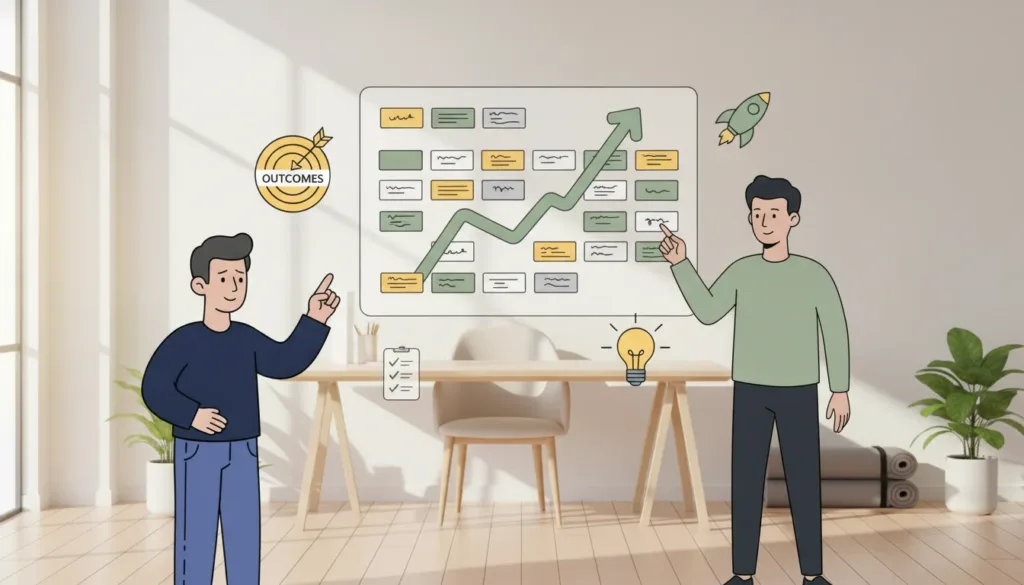
Applying product thinking to client projects means treating outsourced work not as a list of features to ship, but as a product with users, outcomes, and a business to grow. The difference between outsourcing and product development is not who writes the code — it is whether the team optimises for output (tickets closed) or outcomes (problems solved, metrics moved). The best agencies erase that line: they bring a product mindset to every client engagement.
At Dreambit we sit on both sides of this. We have delivered 150+ products for clients over 14 years, and we build our own products too — which forces us to think like owners, not order-takers. Here is how product thinking changes client work, why it matters, and how to apply it without blowing up scope or budget.
Outsourcing vs. product development: what’s the real difference?
Classic outsourcing is a “feature factory”: the client hands over a spec, the vendor builds exactly that, and success is measured by on-time delivery. Product development asks a different question first — what outcome are we trying to create, and how will we know it worked? The deliverable might be the same app, but the decisions along the way are different.
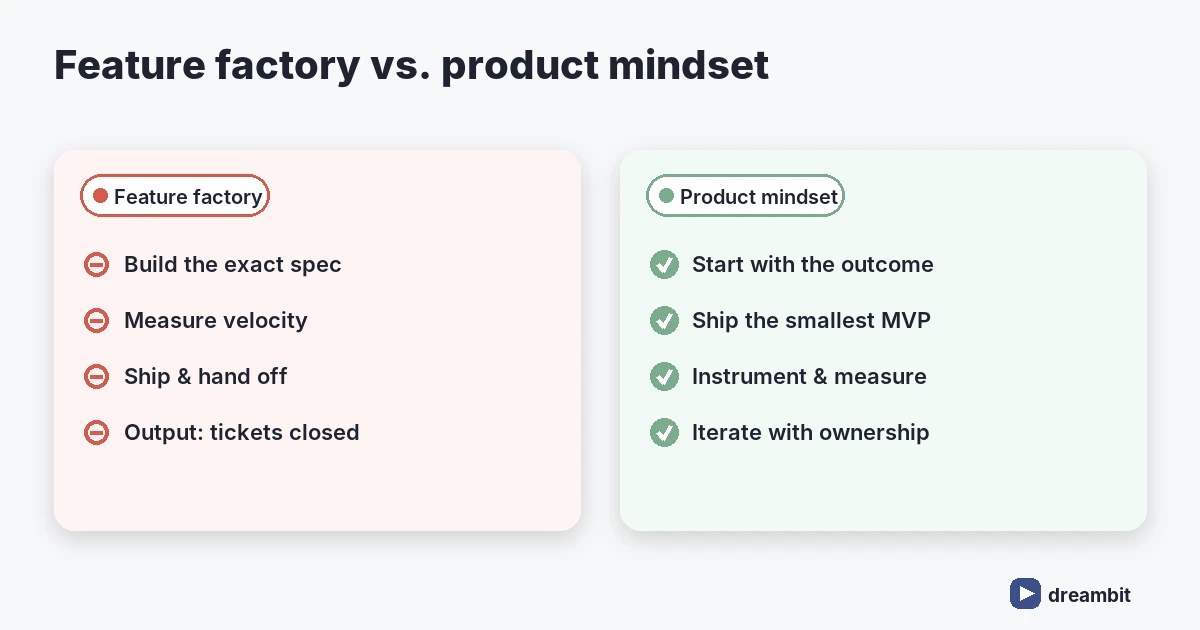
- Feature factory: build what’s on the ticket → measure velocity → ship.
- Product mindset: understand the user and the metric → build the smallest thing that moves it → measure → iterate.
Neither is “wrong,” but only one compounds value. We wrote more about this partnership dynamic in why an agency partnership is key to project success.
Why product thinking matters for client projects
Because clients rarely want software — they want a result. A booking app exists to fill calendars; a fintech app exists to move money safely and retain users. When an agency optimises only for “did we build the spec,” it can deliver a technically perfect product that fails commercially.
Teams that measure outcomes over output ship fewer features but create more value — in our experience, the highest-performing client projects cut their initial feature list by 30–50% and reinvested that time into the few flows that actually drove activation (Dreambit delivery data, 2026).
How to apply product thinking to client projects
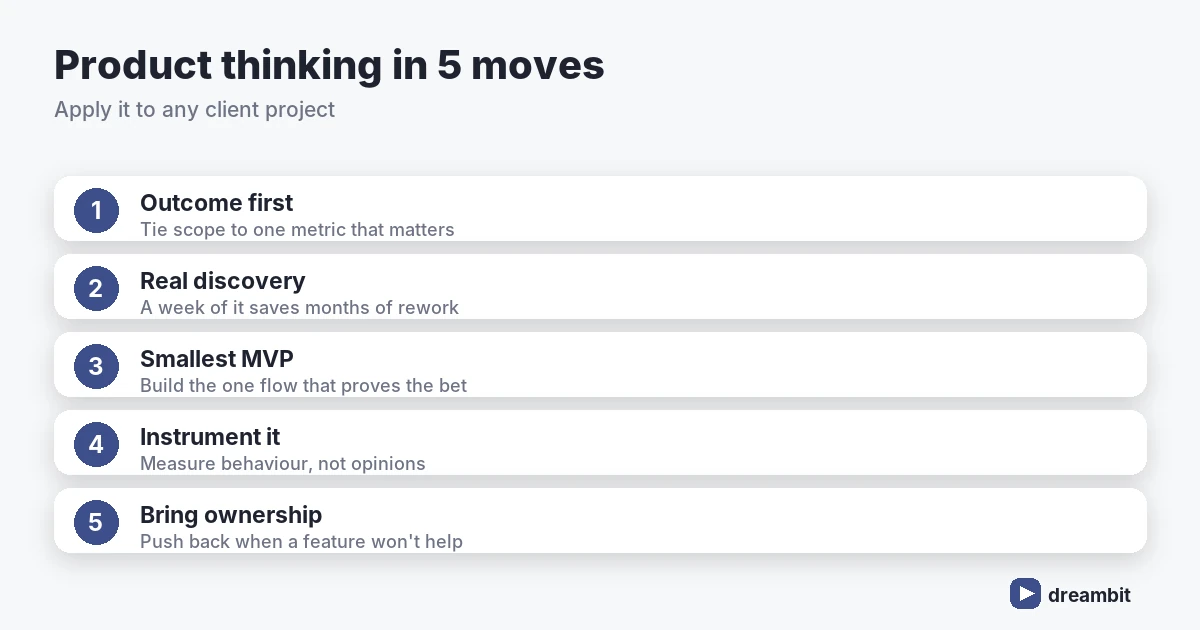
You do not need to become the client’s product manager to think like one. Five practical moves carry most of the value:
1. Start with the outcome, not the feature list
Before estimating, ask what metric this project is meant to move — activation, retention, revenue, cost saved. Tie scope to that metric.
2. Run real discovery
A week of discovery — users, constraints, success criteria — saves months of building the wrong thing. See what we actually do in the first two weeks of a project.
3. Ship the smallest version that proves value
An MVP is a hypothesis, not a downsized product. Build the one flow that tests the core bet. Our lessons from 60+ Flutter/Firebase MVPs go deeper here.
4. Instrument and measure
If you cannot see what users do, you are guessing. Analytics and clear success metrics turn opinions into decisions.
5. Bring ownership, not just hours
Push back when a requested feature won’t serve the outcome. Clients hire experts for judgement, not just hands — that is the heart of CTO-as-a-service thinking.
What our partner sees from their side
We explored this same question with our partners at SDA, who put it sharply in their companion piece on product thinking in outsourcing:
“Sometimes the most valuable contribution a team can make isn’t what it built, but what it helped the client decide not to build at all.”
— SDA, on product thinking in outsourced projects
It is a view we share completely: product thinking is not a methodology you import once, it is a habit both partners practise on every engagement — challenging the backlog, protecting the budget, and building only what moves the outcome.
Common pitfalls when applying product thinking
- Discovery theatre. Running a workshop and then ignoring it. Let findings change scope.
- Gold-plating the MVP. Adding “just one more” feature until the hypothesis is buried.
- No metric ownership. If no one watches the numbers after launch, product thinking stops at launch.
- Treating the client as the enemy of scope. Product thinking is collaborative, not a fight over the contract.
Key Takeaways
- Outsourcing vs. product development is a mindset difference: output vs. outcomes.
- Apply product thinking by starting with the metric, running real discovery, shipping a true MVP, instrumenting it, and bringing ownership.
- The best agencies build client work like their own product — Dreambit does both, across 150+ launches.
- Product thinking is a shared habit between partners, practised every engagement.
Frequently Asked Questions
What is product thinking in the context of client projects?
Product thinking means treating a client engagement like a product: focusing on the user, the outcome, and the business metric rather than just delivering a fixed feature list. It shifts success from “we shipped the spec” to “we moved the result the client actually cares about,” which usually means fewer features built better.
Is outsourcing worse than in-house product development?
Not inherently. Outsourcing becomes a problem only when the vendor acts as a feature factory with no stake in outcomes. An agency that applies product thinking — discovery, metrics, MVP, ownership — can match or beat in-house teams, while bringing wider cross-project experience.
How do you apply product thinking without expanding scope?
By tying scope to a single outcome metric and cutting anything that doesn’t serve it. Product thinking often shrinks scope: you build the smallest flow that proves the core bet, measure it, and only then invest in more. That keeps budgets focused rather than inflated.
Why is Dreambit qualified to talk about this?
Because Dreambit is both an agency and a product builder. Over 14 years we have delivered 150+ products for clients and shipped our own, earning a 4.9★ average rating across 114 reviews. Building our own products forces us to bring an owner’s mindset to every client engagement.
Frequently Asked Questions
What is product thinking in client projects?
Product thinking means treating a client engagement like a product — focusing on the user, the outcome, and the business metric rather than a fixed feature list. Success shifts from “we shipped the spec” to “we moved the result the client cares about,” which usually means building fewer features, better.
How is product thinking different from traditional outsourcing?
Traditional outsourcing builds exactly what the spec says and measures velocity. Product thinking starts with the outcome and the metric, then builds the smallest thing that moves it and iterates. The deliverable may look the same, but only the second approach compounds real business value.
Does applying product thinking increase project cost?
Usually the opposite. Product thinking ties scope to one outcome and cuts what does not serve it, so budgets focus on the few flows that matter. Teams often ship a leaner MVP two to three months sooner, then invest based on real usage rather than guesses.
Can an outsourcing agency really work like a product team?
Yes. The most effective partners combine development with business analysis, discovery, and a metrics-driven mindset. Dreambit does both — we build clients’ products and our own, across 150+ launches — which forces an owner’s mindset onto every engagement.
How do you apply product thinking without expanding scope?
Tie scope to a single outcome metric and cut anything that does not serve it. Run real discovery, ship the smallest MVP that proves the core bet, instrument it, and only then expand. Product thinking usually shrinks scope rather than inflating it.
Build with a product-minded partner
Outsourcing and product development don’t have to be opposites. The agencies worth hiring apply product thinking to every client project — starting with outcomes, shipping lean, and owning the result. Book a free discovery call and let’s apply product thinking to yours.
Written by
Kseniia Sevostianova
Kseniia Sevostianova is a Senior Project Manager at Dreambit, overseeing the delivery of cross-platform web and mobile projects from discovery through launch. With experience spanning fintech, health tech, and enterprise software, she brings structure and clarity to every engagement — ensuring client goals translate into well-scoped, on-time deliverables. Kseniia works closely with development teams and clients to align expectations, manage timelines, and keep complex projects on track. Her background in agile methodologies and cross-functional collaboration makes her a key part of every project team at Dreambit.


Tell us about your product
A 30-minute call with a team that has done it. You leave with refactor, rebuild or leave alone, and why.