Why Your Yoga Studio Booking Software Is Holding You Back

If you run a network of three or more yoga studios, your biggest challenge is often not attracting new students. The real problem is managing them efficiently with the right yoga studio booking software. Many growing studios rely on tools that create friction instead of helping them scale.

You may already have:

  • a CRM
  • booking software
  • maybe even a branded app

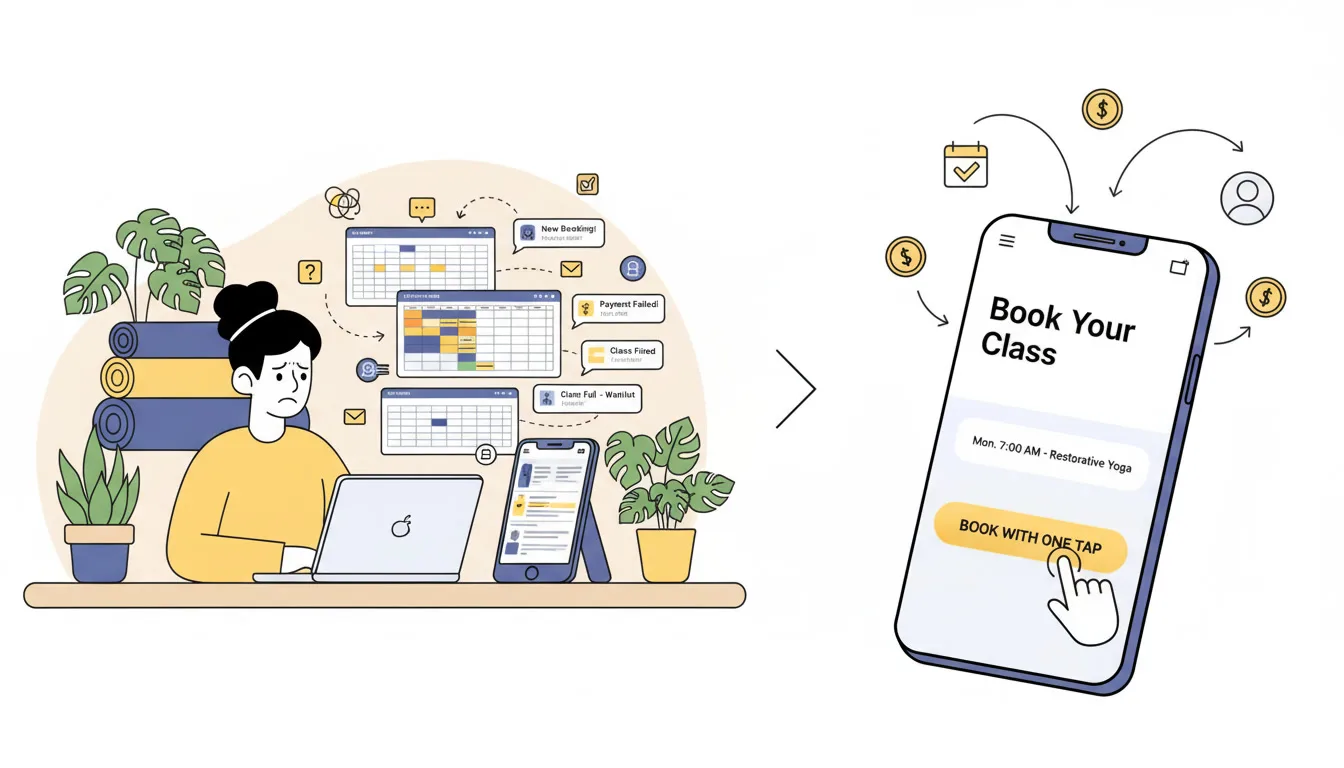
Yet behind the scenes, your team is still dealing with spreadsheets, schedule conflicts, cancellations, and confused clients.

Many growing yoga brands discover that their yoga studio booking software creates friction instead of solving problems.

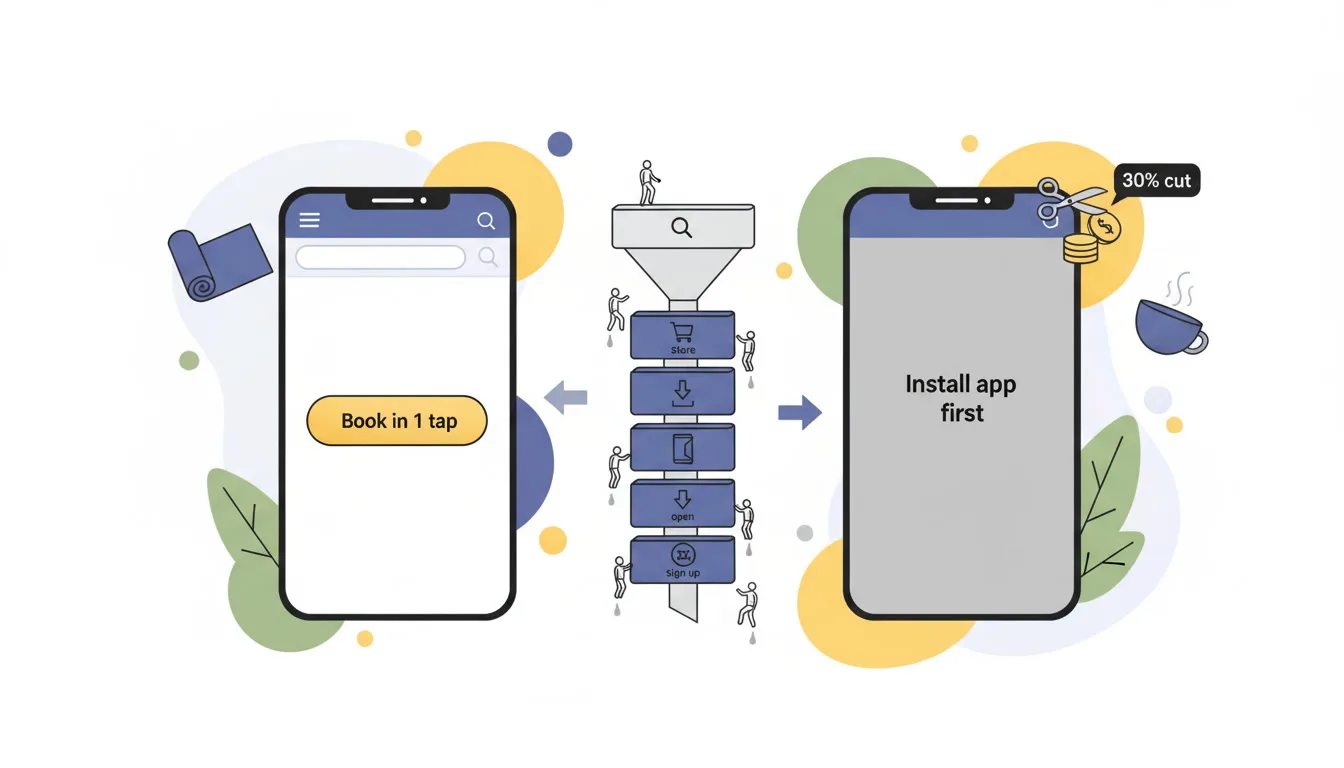
In some cases, complicated booking flows can reduce conversions by 30-40%.

The good news is that you do not need to replace your entire system. Instead, you can improve the experience by adding a smarter layer on top of your existing CRM.

This article explains how that works.

Why Yoga Studio Booking Software Creates Operational Chaos

When your yoga business was small, a basic scheduling system might have done the job right. But as you add more studios and classes, most likely, cracks start to show:

No central view. With 5 or more locations, staff and managers lack a clear dashboard to see what’s happening at each studio. Schedules that live in different systems or spreadsheets make it impossible to get a complete overview of classes, attendance, and revenue in one place. 

Inconsistent processes. Different studios might be using workarounds or slightly different processes because your software doesn’t accommodate multi-location needs. The result is operational inconsistency, which leads to miscommunication and mistakes.

Manual firefighting. Your team ends up compensating for software shortcomings manually – instead of focusing on customer experience, your staff is texting clients reminders, fixing booking mistakes, or exporting data to Excel. 

In short, the software that once supported you is now actively hindering your growth. It’s frustrating for your team, and it’s absolutely felt by your customers.

How Bad Yoga Studio Booking Software Drives Clients Away

Perhaps the most painful symptom of bad studio software is customer drop-off. Your yoga students might love your classes, but if booking a spot is a headache, they won’t stick around. For clients, the chaos in processes may result in:

  • Too many steps: Say a new client finds your studio online and tries to book a class. If they have to navigate a confusing interface, create an account on a separate site, or input the same information multiple times, they may give up. In fact, studies show that at least 22% of people will quit if checkout is long or confusing. That means you could be losing many interested customers simply due to UX friction.
  • Lack of mobile-friendliness: Modern consumers expect to do everything on their phones. If your booking site isn’t mobile-optimized or requires pinching and zooming, it’s a major turn-off. Busy would-be yogis might intend to sign up for class, but a clumsy mobile experience can drive them away before they ever roll out a mat.
  • No immediate confirmation: A common complaint with generic studio systems is uncertainty. Did the payment go through? Am I really booked? If the software doesn’t give clear, instant confirmations and reminders, new clients hesitate. That lack of confidence can discourage them from completing a purchase or returning to book again.

All these issues result in a poor customer journey and make your potential clients silently slip away to a competitor with a smoother system.

Why Replacing Your Yoga Studio Booking Software Is Risky

At this point, you might be thinking: “Okay, my software is a mess – maybe I should dump it and get a brand-new CRM or studio management platform.” It’s tempting to believe that the grass is greener on another system, but switching comes with its own pitfalls. Studio management platforms can be rather expensive – often $169/month or more per location for the full feature set. 

In addition, you need to transfer all client data history, class schedules, and payment info into a new system, which can be error-prone and time-consuming. There’s always a risk of losing information or disrupting your business during the transition. Not only that, but you and your staff will have to learn how to handle a new system from scratch, while your clients will have to adapt to a new booking process as well. 

The worst part is that a new system might not solve everything. You might gain some features but lose others you customized. In short, replacing your CRM is risky and costly. And we offer a smarter solution: keep the solid foundation (the CRM database and backend that hold your business logic and data) and build a better experience on top of it.

A Custom Add-On over Your Existing CRM

Imagine if you could keep all the good parts of your current system (your client records, class schedules, and payment processing), but simply give it a new “brain”. That’s exactly what a custom CRM add-on does. Here’s how it works and why it can become a real game-changer for you:

  1. Unified customer journey. A custom add-on can provide a single, seamless interface for your clients, even if, behind the scenes, you have multiple studios or databases. For example, Dreambit’s development approach involves deep integration, meaning your new app or website can connect with your CRM’s API and databases. Your students might just see a clean mobile app with your branding where they can view all your studio locations’ schedules in one place, book a class in a few taps, and manage their memberships effortlessly. They never need to know that in the back end, the app is pulling and pushing data to a legacy CRM system.
  2. Tailored to your workflow. Unlike generic software, a custom solution is built around your business rules. Do you allow multi-class passes that can be shared across locations? Have specific drop-in pricing vs member pricing logic? Need to enforce a maximum class size and auto-trigger a waitlist? All of that can be coded into the add-on.
  3. Keep the data, extend the features. Think of a custom add-on as giving your CRM superpowers. All your core data stays in the CRM, but we add new capabilities on top. For instance, if the CRM lacks a modern notification system, the add-on can handle sending push notifications or WhatsApp messages to clients for you.
  4. Smooth transition: Implementing a custom layer can often be done incrementally. You don’t have to shut down your old system while switching. For example, you can launch the new client-facing app while still double-running the old interface until everyone’s comfortable.

In essence, you’re advancing your existing system rather than throwing money at a brand-new product with unknowns. By collaborating with developers who understand both your industry and technology (like our team at Dreambit), you can build exactly what you need.

Real-Life Examples 

Talking theory is fine, but let’s visualize this. What does a seamless, custom-enhanced studio software actually look and feel like for owners and clients? Here are a couple of snapshots from our experience delivering solutions in the wellness and fitness space:

Intuitive dashboard – complete clarity at a glanceInstead of juggling spreadsheets or logging into multiple systems, imagine an analytics dashboard that greets you each morning with all the key metrics of your studios. Today’s classes: See all classes across all locations happening today, with indicators of how many spots are booked vs available.

Profit in real-time: A live ticker shows sales made today, week-to-date revenue, and even calculates profit after instructor costs. You have real-time profit control and can make on-the-fly decisions (like adding a new class if one is overbooked, or launching a promo if a time slot underperforms).

Student engagement stats: Know your active client count, new sign-ups this week, and churn at a glance. It can even flag that 5 VIP members haven’t visited in 3 weeks, prompting you to take action. Studio owners who have used these kinds of custom dashboards report feeling back in control of their business, rather than blind and reactive.
Effortless booking Interface – frictionless for clientsOn the client side, the difference is night and day. For instance, Dreambit helped one wellness brand combine multiple functions into a single app, and the results were dramatic: 9,000 monthly active users within 2 months of launch. For a yoga studio network, a tailored booking app works like this:A new client downloads your studio app or opens your web booking page. They sign up in seconds (perhaps using a one-tap Google/Apple account login – no lengthy forms).

The app instantly shows classes at the nearest studio by default (using location or saved preferences), but the user can easily toggle to other locations in your network. All the schedule data is pulled in real-time from your CRM, but it feels like browsing a simple calendar.

Booking is one tap. The class details are clear (time, instructor, remaining spots). If they have a membership or class package, the app automatically applies it. If not, it prompts for payment with options like credit card, Apple Pay, etc., saved securely for next time.

The whole flow from opening the app to confirming a class spot can literally take under 30 seconds. The experience is smooth and modern – on par with booking a ride or ordering a coffee on mobile. This is crucial because customers compare every app to the best ones they use daily. By delivering a top-notch user experience, you not only fill more class spots but you also differentiate your brand. It shows you care about their convenience.


And we don’t have to stop there. Want to see if these improvements really make a difference? The beauty of digital solutions is that we can measure everything. We can A/B test different onboarding flows, try a special offer screen when someone tries to cancel, etc. The point is, a custom solution not only fixes your immediate pains but opens up a world of optimization to continually grow your studio’s engagement and revenue.

One of Dreambit’s fitness app projects, QazFit, tackled a similar challenge and unified disconnected fitness tools into one comprehensive solution. The result? Users could track workouts, get coaching, and see progress stats all in one place, making their fitness journey “simple and effective at every stage”. The same principle can be applied to your yoga studios. By uniting everything from class booking to progress tracking under one digital roof, you’re delivering simplicity and effectiveness – a combination that keeps clients coming back.

The Payoff: Automation, Insight, and Growth

Let’s now talk about what all this means for your business. Why go through the effort of building a custom CRM add-on? Simply put, because it can transform your studio’s growth trajectory. Here are the key benefits and outcomes you can expect:

  • Automated scheduling & admin tasks: Think of all the repetitive tasks that eat up hours – assigning instructors to classes, adjusting the schedule for holidays, sending out reminder emails or texts, processing membership renewals… A well-designed system can automate most of these operational tasks. For example, you could set rules so that if a class waitlist exceeds 5 people, the system automatically opens a new class and notifies those clients. Or automate an email to anyone who hasn’t attended in 2 weeks.
  • Real-time insights = smarter decisions: When your data is consolidated and live, you can make proactive decisions rather than reactive ones. Maybe your 7pm class in one branch is always full with a waitlist (hinting you should add another at that time), while the 8am class struggles (maybe a different instructor or format would do better). These insights come to light when you have dashboards and reports that crunch your data automatically. It’s like having a business analyst on staff 24/7, showing you opportunities to improve profit and service.
  • Enhanced client lifetime value (LTV): Smoother experiences lead to happier customers, and happy customers stick around. Reducing friction in booking and improving communication (through timely notifications, easy schedule changes, etc.) directly boosts retention. And even a small uptick in retention can massively lift profits. Plus, a modern app can include loyalty rewards, referral programs, and personalized class recommendations – all geared toward increasing LTV by keeping clients interested in your studios.
  • Brand loyalty: In an industry where many small studios still rely on clunky third-party systems, your investment in a seamless digital experience sets you apart. Offering a custom-branded app or portal positions your studio as forward-thinking and customer-centric.

Conclusion: Growth Through Better Experiences, Not Bigger Headaches
Your yoga studio’s growth should be limited by how inspiring your classes are, not by the limitations of your software. If your current setup is holding you back, let’s change that – not by discarding it, but by elevating it. With the right custom solution, you’ll turn operational chaos into smooth flow, keep your clients happy and coming back, and ultimately, open the door for your business to reach new heights.

Ready to make your software work for you, not against you? At Dreambit, we can handle everything from the initial discovery of what you need to through design, development, quality assurance, and support. Let’s talk.

Blog

LET’S TAKE A LOOK
AT YOUR PROJECT

Eldar Miensutov
Founder

Thanks for the information. We will contact with you shortly.