AI is everywhere right now, wrapped in equal parts hype and fear. We’ve skipped both. At Dreambit, AI isn’t a trend we’re chasing or a threat we’re bracing against — it’s a tool we’ve learned to use well, with intention. This is where we stand on responsible AI software development.
AI is a tool, not a shortcut
We don’t use AI to do less thinking. We use it to spend our thinking where it matters.
The boring parts of building software — digging through unfamiliar code, writing the first draft, chasing down a bug, reading documentation — AI handles faster than we ever could alone. That frees our people to focus on the things AI can’t do: judgment, architecture, the hard product decisions, knowing what should be built in the first place.
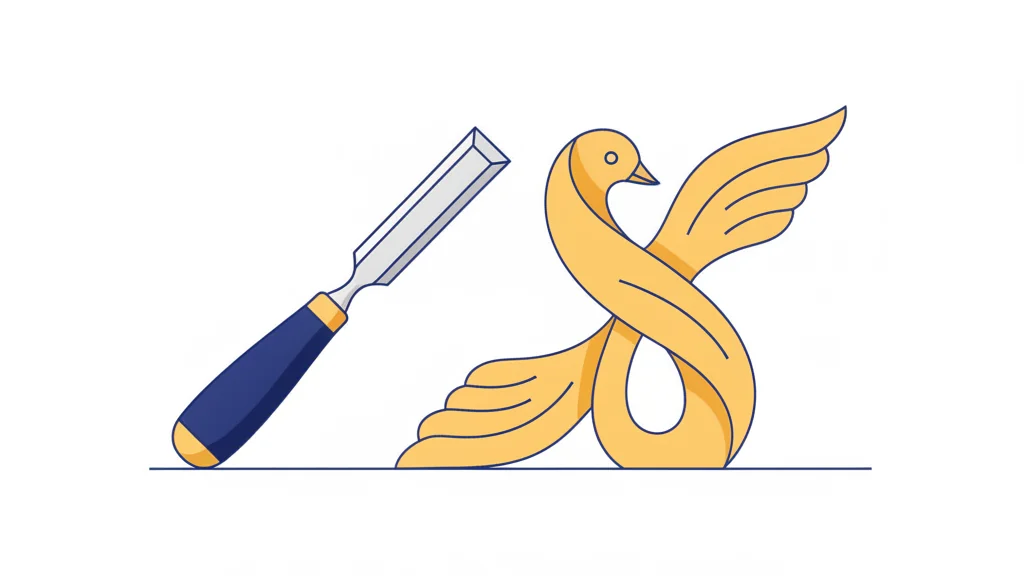
A tool doesn’t replace the craftsman. It makes a good one faster. That’s exactly how we treat it.
Quality is non-negotiable
Speed means nothing if it costs quality. So we built our process to make sure it never does.
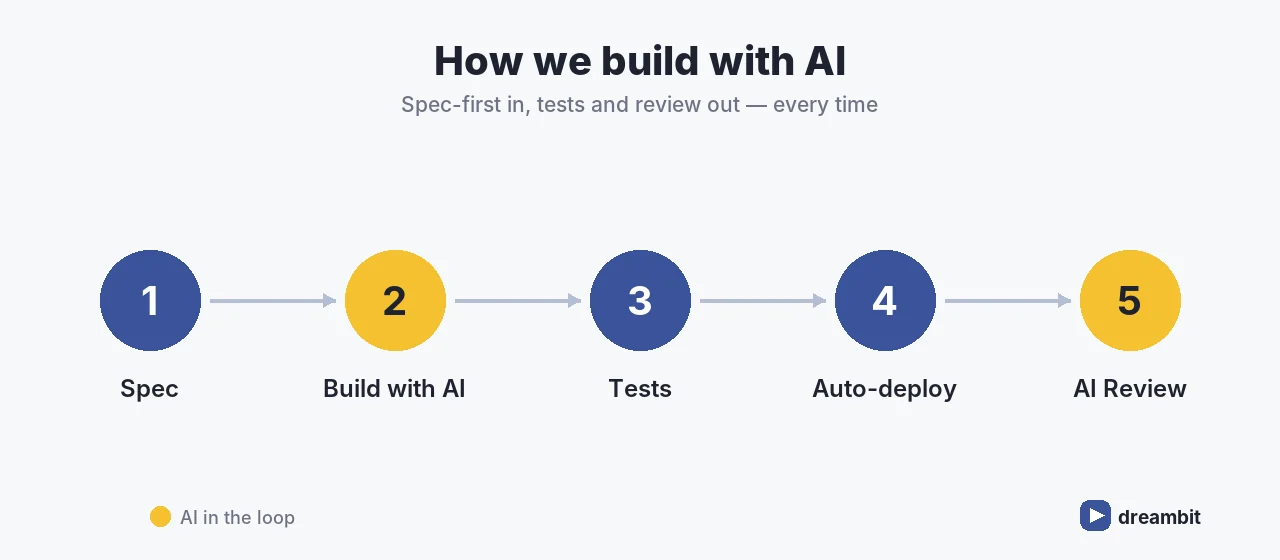
We work spec-first: before anything gets written, we define what “correct” means. Everything is covered by tests that check real behavior, not vanity metrics. AI-generated work passes through the same review — and the same scrutiny — as anything a human writes. Nothing skips the line.
AI is fast, and fast can be dangerous: it produces work that looks right with total confidence. That’s precisely why we never let it run unchecked. A specification on the way in, tests and review on the way out. Confidence is earned, not assumed.
Everyone, not a chosen few
In a lot of companies, “using AI” means one enthusiast in the corner while everyone else watches. Not here.
AI is part of how every engineer, designer, and manager at Dreambit works — every day. We don’t hand off “the AI tasks” to a special team. We’ve made fluency a shared standard, with real onboarding, documented practices, and a team that helps each other level up. The result is consistent, not dependent on who happened to learn the tricks.
We respect the limits
Knowing what a tool can’t do is as important as knowing what it can.
We’ve spent real time learning where AI breaks — where it hallucinates, where it falls apart at scale, where bigger isn’t better. We don’t pretend those limits don’t exist. We design around them. That hard-won understanding is the difference between a flashy demo and software that actually holds up in production.
Honest about what AI is — and isn’t
We won’t tell a client AI is magic, and we won’t pretend it’s useless. Both are lies.
We’ll tell you where it genuinely creates value, and where it would just burn budget. We think being straight about that is the whole point. The companies that win with AI aren’t the loudest — they’re the ones who actually understand it.
Why responsible AI software development is the right way to build
Because we think responsible AI software development is simply the right way to build now.
AI done carelessly produces fragile, insecure, throwaway work — and gives the whole field a bad name. AI done with discipline lets a strong team move faster than ever without giving anything up. We’ve chosen the second path, and we’ve put in the work to walk it properly.
That’s our take. Not hype, not fear — just craft, brought up to speed.
Frequently Asked Questions
We treat AI as a tool, not a shortcut. It handles the repetitive work — exploring unfamiliar code, first drafts, debugging, documentation — while our engineers keep judgment, architecture, and product decisions. Every AI-assisted change is spec-first on the way in, and fully tested and human-reviewed on the way out.
Yes, when it earns it. AI is fast and can look right with total confidence, so we never let it run unchecked. AI-generated work passes the same code review, tests, and scrutiny as anything a human writes. A specification goes in; tests and review come out. Confidence is earned, not assumed.
Not the way we work. Speed means nothing if it costs quality, so our process is built so it never does: spec-first definitions of correct, tests that check real behaviour, and review on every change. Responsible AI software development makes a strong team faster without giving anything up.
No. AI accelerates a good developer; it does not replace one. It cannot do judgment, architecture, the hard product decisions, or know what should be built in the first place. A tool makes a good craftsman faster, and that is exactly how we treat AI-assisted development.
In the repetitive, time-consuming parts: digging through unfamiliar code, writing first drafts, chasing bugs, and reading documentation. Automating those frees our people for the work AI cannot do well. We also respect AI limits, where it hallucinates or fails at scale, and design around them.